


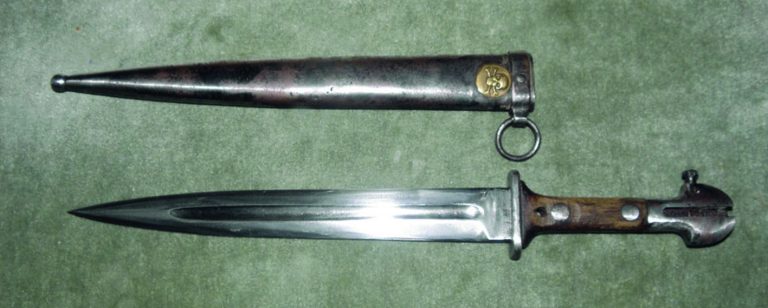
The M24 ÄK is considered one of the rarest and most valuable bayonet-style military knives among collectors worldwide. It was developed in the Kingdom of Yugoslavia shortly before the Second World War for use by specially trained assault units. Although historical records indicate that 6,000 examples were ordered, collectors believe that only about 3,000 were actually produced. Very few have survived, and well-preserved originals can command prices of several thousand euros.
The weapon is remarkable both for its unusual appearance and its highly specialised purpose. It was issued to the Kingdom of Yugoslavia's assault formations, which were intended to perform reconnaissance, raids and sabotage missions. These units were officially established in 1940 and were trained in firearms, knife fighting, swimming, climbing, skiing, parachuting and the operation of motor vehicles.
Their primary firearm was the compact M1924 ÃÂÃÂÃÂÃÂÃÂÃÂÃÂÃÂÃÂÃÂÃÂÃÂÃÂÃÂÃÂÃÂÃÂÃÂÃÂÃÂÃÂÃÂÃÂÃÂÃÂÃÂÃÂÃÂÃÂÃÂÃÂÃÂK rifle, a shortened weapon based on the Mauser 98 system and chambered for the 7.92x57 mm cartridge. Its compact size made it suitable for specialised operations, although its short barrel produced a powerful muzzle flash and considerable noise, particularly noticeable at night.
The M24 ÃÂÃÂÃÂÃÂÃÂÃÂÃÂÃÂÃÂÃÂÃÂÃÂÃÂÃÂÃÂÃÂÃÂÃÂÃÂÃÂÃÂÃÂÃÂÃÂÃÂÃÂÃÂÃÂÃÂÃÂÃÂÃÂK knife was inspired by the Caucasian kindjal-a long, symmetrical, double-edged dagger. Its design also drew upon the earlier Serbian M1912 assault knife, developed from experience gained during the Balkan Wars and the First World War. Unlike conventional Mauser bayonets, the M24 ÃÂÃÂÃÂÃÂÃÂÃÂÃÂÃÂÃÂÃÂÃÂÃÂÃÂÃÂÃÂÃÂÃÂÃÂÃÂÃÂÃÂÃÂÃÂÃÂÃÂÃÂÃÂÃÂÃÂÃÂÃÂÃÂK was designed primarily as an effective hand-held combat knife that could also be mounted on a rifle.
Its double-edged blade was approximately 235 millimetres long, with a strong central point and fullers running along both sides. The symmetrical handle provided a secure grip and good balance. The knife was carried in a modified metal scabbard bearing the insignia of the assault units. Its distinctive construction has sometimes led foreign authors to misidentify it as a royal guard weapon or associate it with later Second World War Chetnik formations.
The article also describes a modern project by Vladimir MomÃÂÃÂÃÂÃÂÃÂÃÂÃÂÃÂÃÂÃÂÃÂÃÂÃÂÃÂÃÂÃÂÃÂÃÂÃÂÃÂÃÂÃÂÃÂÃÂÃÂÃÂÃÂÃÂÃÂÃÂÃÂÃÂiloviÃÂÃÂÃÂÃÂÃÂÃÂÃÂÃÂÃÂÃÂÃÂÃÂÃÂÃÂÃÂÃÂÃÂÃÂÃÂÃÂÃÂÃÂÃÂÃÂÃÂÃÂÃÂÃÂÃÂÃÂÃÂÃÂ of Zemun, who produced a limited series of fifty numbered reproductions. These replicas were manufactured using materials and procedures intended to closely resemble the originals, while additional markings and differently positioned serial numbers clearly identify them as modern reproductions rather than authentic historical pieces.
Source: https://kalibar.rs/